Is Boracay Safe for Students? A Practical Guide
Yes. Boracay is one of the safest and most beautiful islands in the world, and it's a relaxed, friendly place to live and study. It's a small island where school, beach and friends are only minutes apart. English is spoken everywhere, and students from more than 80 countries have studied with us. Like anywhere you travel, a little common sense goes a long way. This guide covers what makes Boracay a good place for students and the simple precautions worth taking.
Why Boracay feels safe for students
A small, walkable island
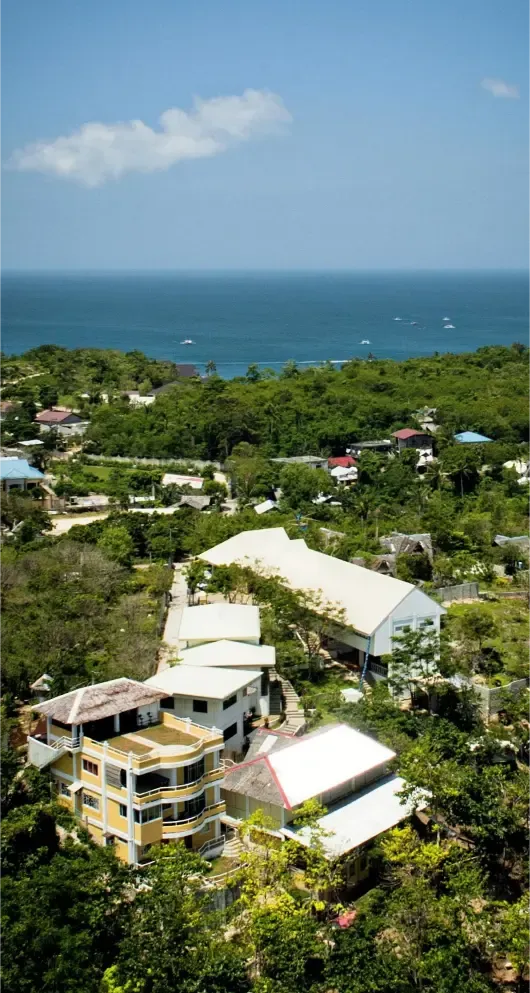
Boracay is small, so you never have to travel far. Our student dorm is a 3-minute walk from school, our Annex hotel is a one-minute walk, and White Beach is close by. You won't spend hours on public transport or find yourself lost in a big city.
English is spoken everywhere
English is an official language of the Philippines. Most people understand and speak it, so you can ask for directions, explain a problem at a clinic or talk to the police without a translator. That's a big help in an emergency, and great practice for your English the rest of the time.
Help close by
- Medical care: there are several medical clinics on the island, and our office can tell you which one to visit.
- Immigration: there's an immigration office on Boracay, so you don't have to leave the island to sort out your visa. Our office helps every week with visa extensions and the Special Study Permit.
- Our team: our office staff and student managers are there to help with everyday questions, from SIM cards to clinics.

A friendly student community
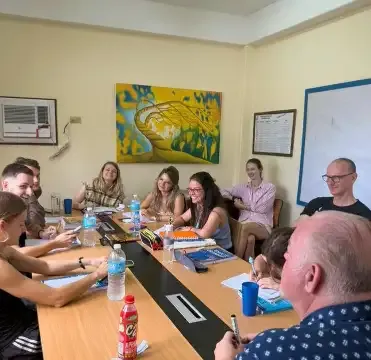
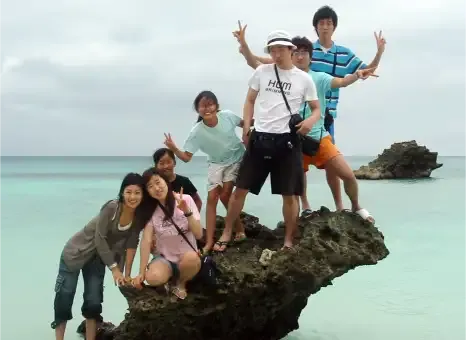
You'll study in small classes with people from all over the world and live alongside other students. Many go on weekend trips and activities together, so you're rarely on your own unless you want to be.
Sea safety: the beaches are beautiful, but respect the water
For most visitors the biggest risks on Boracay come from the sun and the sea, not from people.
- Swim where others swim. White Beach is generally calm, especially from November to March.
- Take care at Puka Shell Beach. It's quieter and great for picnics, but the water gets deep suddenly and the current can be strong.
- Don't swim after drinking alcohol or alone at night.
- Use a life jacket on boat trips and when snorkelling if you're not a confident swimmer.
- Book water sports with established centres. Most kite-boarding and windsurfing centres are on Bulabog Beach.
- Watch the weather. In the rainy season (around June to October) the wind and waves can be stronger. Read more in our guide to the best time to study on Boracay.
Sun, heat and health
- Use sunscreen, a hat and sunglasses. The tropical sun is strong all year, and temperatures can reach 38 °C from April to June.
- Drink plenty of water. Tap water is not safe to drink. Bottled water is sold everywhere, and the school has water dispensers on campus and at the dorm.
- Use insect repellent, especially in the evening.
- Bring any medicine you need, and ask our office which clinic to visit if you feel unwell.
- Get travel insurance that covers medical treatment and water activities. It's the single most useful safety step for any trip abroad.
Money and belongings
Boracay is a relaxed place, but as in any popular tourist destination, petty theft can happen if you're careless. Simple habits keep you safe:
- Don't leave your phone, wallet or bag unattended on the beach while you swim. Bring a friend or a dry bag.
- Carry only the cash you need for the day.
- Use ATMs inside banks or malls where possible. ATMs all around the island accept foreign cards.
- Keep your passport in a safe place at your accommodation, and carry a photo of it on your phone.
- Keep a backup card separate from your main one.
Getting around
The e-trike is the most popular way to get around and carries about five passengers. The minimum fare is 10 pesos and rises with distance. Fares are usually posted inside, but drivers sometimes charge foreigners more, so check the posted fare or agree on the price before you get in. An empty trike may charge you the charter rate (100 pesos or more) for all the seats. There's also a hop-on hop-off bus, and a monthly card is the easiest option if you use it often.
Arriving for the first time? Our guide to getting to Boracay from Caticlan or Kalibo explains each step. We also offer Caticlan airport pickup and drop-off for $48, so you don't have to work it out alone after a long flight.
Nightlife: enjoy it sensibly
Boracay has plenty of bars, restaurants and beach parties, and many students enjoy them. Drink responsibly, watch your glass, go out with friends and agree how you'll get home. Remember that you have class in the morning, too.
Respect the island rules
Boracay has rules to protect the island and its beaches. Breaking them can mean a fine:
- No smoking on the beachfront
- No littering
- No fishing
- No urinating or defecating on the beach
- No pets on the beachfront
- No taking sand or pebbles
Emergency numbers
For an ambulance, the fire service or the police on Boracay, the local numbers are 288-3066 / 166. Save them in your phone when you arrive, along with the school's numbers. You can find our contact details on the contact page and more island tips in our FAQ.
Is Boracay safe for younger students?
Yes, with the right setup. Our Junior English Camp for ages 4–17 runs in July–August and January–February, with five English classes and indoor and outdoor activities every day. Additional fees may apply for children under 16 travelling without a guardian. Parents can also stay in the student residence with their child.
Plan your stay with confidence
Choose accommodation close to school. Our student dorm is a 3-minute walk away, and a shared standard room starts at $148 for one week. Then pick the right course for your level. For everything else, read our complete guide to studying English in the Philippines, our packing checklist and our post on the Special Study Permit and visa extensions.
FAQ
Is Boracay safe for solo female travellers and students?
Many students travel to Boracay alone. Living close to school, studying in small classes and joining activities with classmates makes it easy to settle in. Use the same common sense as at home, especially at night.
Can I drink the tap water on Boracay?
No, tap water is not safe to drink. Buy bottled water or refill your bottle at the water dispensers on campus and at the dorm.
What should I do if I get sick?
There are several medical clinics on the island. Ask our office which one to visit. Travel insurance that covers medical treatment is strongly recommended.
What are the emergency numbers on Boracay?
Ambulance, fire and police: 288-3066 / 166. Save them in your phone when you arrive.
Have more questions about life on Boracay? Contact us and we'll answer them, together with a free personal quote, within one working day.