
ESL Teachers in the Philippines: Qualifications to Look For
The teacher in front of you matters more than the school's logo, the pool or the price. Yet most school websites describe their teachers in one line. Here is what the usual phrases mean in the Philippines, what you can reasonably expect, and the questions that tell a strong teaching team from a tired one.
Why Filipino teachers are the backbone of ESL in the Philippines
English is an official language of the Philippines and much of the school system is taught in it, so Filipino teachers grow up studying and then teaching in English. The accent is clear and neutral, which is why the country also runs much of the world's call-centre industry; we wrote about it in is the Filipino accent good to learn from. Filipino teachers are the reason a one-to-one lesson in the Philippines costs a fraction of what it costs in London or Sydney, and the reason daily one-to-one lessons are standard here and rare everywhere else.
What the qualifications mean
- Bachelor of Secondary Education, major in English. A four-year teaching degree with English as the specialism. This is the standard qualification for a professional English teacher in the Philippines, and the one to look for on a one-to-one teacher's profile.
- Licensed professional teacher. The teacher has passed the national Licensure Examination for Teachers and is registered with the Professional Regulation Commission. It is the equivalent of a state teaching licence and goes beyond a short certificate.
- TEFL, TESOL, CELTA. Certificates in teaching English to non-native speakers, from a few weeks to a few months of training. Good to see, especially on native-speaker teachers who may not hold an education degree. On its own, a four-week certificate is a starting point, not a career.
- Exam coaching record. For IELTS, TOEIC or TOEFL preparation, ask how long the teacher has coached the exam and what scores students reached. A general English teacher is not automatically an IELTS teacher.
Native speaker or Filipino teacher?
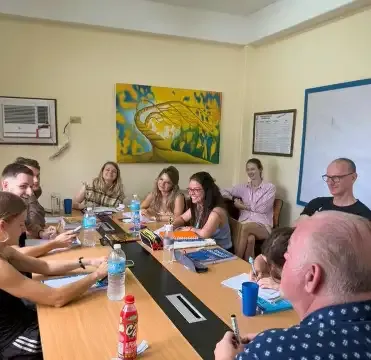
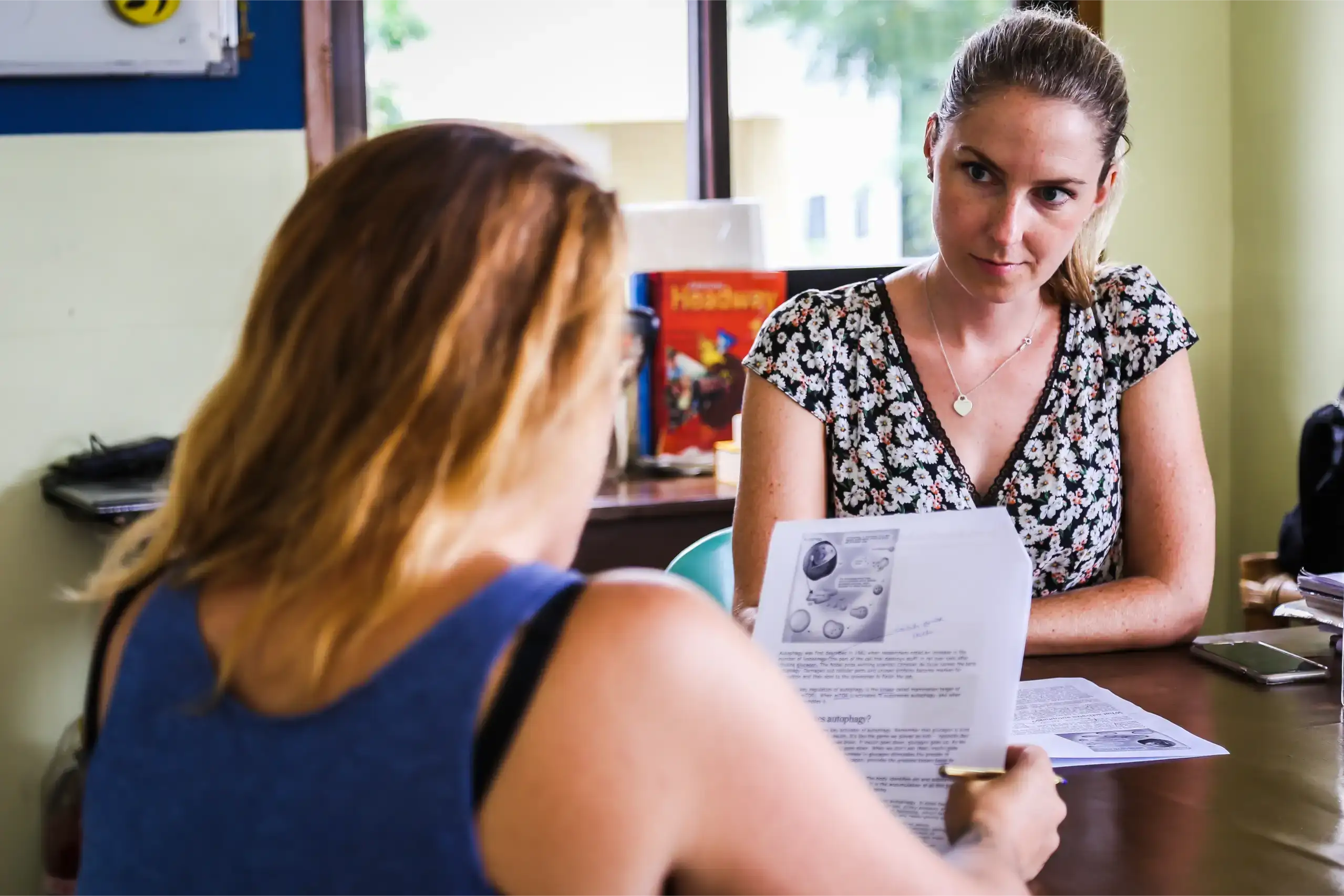
The honest answer is both, for different jobs. Native-speaker teachers from Canada, Britain, the United States or Australia are valuable for natural idiom, listening to a range of accents, and conversation at higher levels. Filipino teachers have usually studied English grammar more formally than most native speakers ever did, which makes them excellent at explaining why a sentence is wrong. The best schools use the two together. At Paradise English the group classes are taught by Canadian, British, American and Filipino teachers, and the one-to-one lessons by Filipino teachers with education degrees, several of them licensed professional teachers with TESOL certification and ten or more years of ESL teaching.
What to be wary of is "native speaker" as the only qualification. A passport is not a teaching credential. Ask what else is on the profile.
The number nobody advertises: teacher tenure
Teacher turnover is the quiet problem of the industry. Big academies hire by the dozen and lose teachers just as fast, which means your teacher in week four may not be the one from week one. Ask how long the teachers have been at the school. Paradise English's average teacher tenure is nine years; some of the team have taught here since 2006. A teacher who has taught hundreds of students from eighty countries has seen your mistakes before and knows how to fix them.
Questions that reveal the teaching team
- Can I see the teachers' profiles with their qualifications, not just photos?
- Who teaches the group classes and who teaches one-to-one?
- How long has the average teacher been at the school?
- Will I keep the same one-to-one teacher for my whole stay?
- If I am preparing for IELTS, who is my teacher and what is their coaching record?
- What training do new teachers get before they teach?
A school that answers all six without hesitation is a school that is proud of its teachers. You can read ours on the teachers and team page, and compare schools by region in the guide to ESL schools in the Philippines.


