Food for Students on Boracay: Cafeteria, Home-Stay Meals and Eating Out

Food is one of the first things students ask about, and one of the easiest to sort out on Boracay. You can eat at the school cafeteria, cook in the dorm, have your meals included with a home stay, or eat out on an island full of restaurants. This guide explains each option, what it costs at the school, and how to eat well on a student budget.
School prices in this article are our 2026 rates in US dollars and update automatically when our price list changes. Restaurant prices change often, so we don't quote them here.
The school cafeteria
Our cafeteria serves pre-arranged lunch and dinner to enrolled students. Shopping is done daily, so only fresh meat, fish, poultry, fruit and vegetables are served. Meals are optional: sign up in advance when you book, or when you arrive.
- Lunch for 5 weekdays: $50
- Lunch, weekdays for 1 month: $185
These optional extras may change during peak seasons such as Christmas, New Year, Chinese New Year and Holy Week. Between classes, the open-air student lounge has plenty of tables and chairs, a small library, and snacks are sometimes available at a reasonable price. See how lunch fits into the timetable in a typical day at Paradise English.

Meals in each type of accommodation
- Student dorm: meals are not included, but the dorm has a shared kitchen, fridge and dining area, so you can cook, and the school is a 3-minute walk away for cafeteria lunch.
- Home stay: breakfast every day, lunch at school on weekdays and dinner every weekday are included. You live with an English-speaking host family, so meals double as conversation practice.
- Annex hotel and 4-star resort: breakfast, lunch and dinner are available at your own cost.
Compare the rooms and what each includes on our accommodation page.
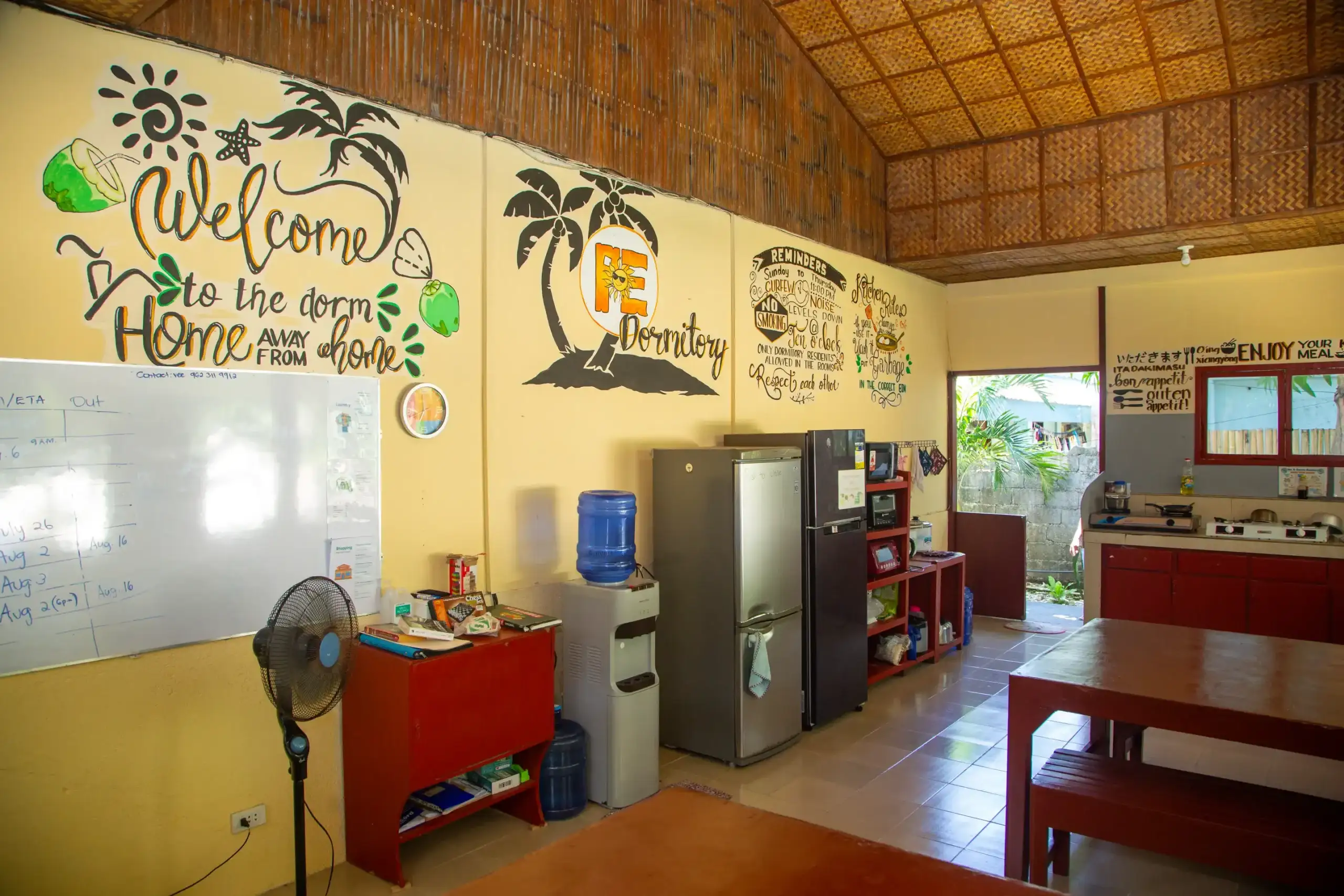
Drinking water
Tap water on Boracay is not safe to drink. Bottled water is sold everywhere, and the school has water dispensers on campus and at the dorm, so bring a refillable bottle and fill it before class.
Cooking for yourself
If you stay in the dorm, the shared kitchen is the cheapest way to eat. For ingredients, D'Talipapa at Station 2 is the island's market, where locals shop for seafood, fruit and vegetables; ask your classmates or our office for tips on buying there, including the nearby stalls that are known for cooking what you buy. There are also supermarkets and shops at D'Mall in the centre of White Beach, at City Mall and at the E-Mall at Station 3, close to the school. Most offices open on weekdays and Saturday mornings, but restaurants and food shops are open every day.
Eating out
White Beach is lined with restaurants and bars from Station 1 to Station 3, and Station 3 is the closest to Paradise English. You will find Filipino dishes, seafood, and food from almost every country our students come from. Our students have written their own reviews of Boracay's top restaurants; use it as a starting list and ask your classmates for their current favourites.
A few habits keep eating out affordable:
- Eat where locals eat, a few steps back from the beachfront.
- Share dishes: Filipino meals are made for the table.
- Cafeteria lunch on weekdays, restaurants at the weekend.
- Pay in cash at small places; some restaurants accept cards, but not all.
After-class ideas, from sunset at White Beach to weekend trips, are in things to do on Boracay after class.
Filipino food worth trying
Eating local is the cheapest and most interesting way to eat on the island. Rice comes with almost everything. Look for grilled fish and chicken, adobo (meat simmered in soy sauce and vinegar), sinigang (a sour soup with vegetables), pancit (noodles), and fresh mango, which is a Philippine favourite. Filipino breakfasts are hearty, often rice with egg and meat, and fruit shakes are sold all along White Beach. Ordering in English, asking what is in a dish and chatting with the staff is part of your practice; our post on travel English for beginners has the phrases you need at a restaurant.
Dietary needs
Vegetarian, allergies, halal, or anything else: tell us when you book, and we will tell you what we can arrange at the cafeteria and, if you choose a home stay, with your host family. On the island, restaurants with menus in English make it easy to ask what is in a dish, and asking is itself good English practice.
How much to budget for food
It depends on how you eat. Cafeteria lunch on weekdays plus cooking in the dorm is the lowest-cost option; a home stay covers most meals in its price; eating out every day costs the most. Our guide to the cost of a month in the Philippines shows where food fits in the full budget.
FAQ
Are meals included in the course price?
No. Tuition covers your classes. Cafeteria lunch is an optional extra ($50 for 5 weekdays), and only the home stay includes meals: breakfast daily, lunch at school and dinner on weekdays.
Can I sign up for cafeteria meals after I arrive?
Yes. Meals are optional, and you can sign up in advance or when you arrive.
Is the tap water safe?
No. Drink bottled water or use the free dispensers on campus and at the dorm.
Can I cook in the dorm?
Yes. The student dorm has a shared kitchen, fridge and dining area.
I'm vegetarian. Will I find food?
Tell us when you book so we can tell you what the cafeteria and host families can arrange. On the island, most restaurants have vegetable and rice dishes, and menus are in English.
Planning your stay? Send us a message and we'll reply within one working day with a free personal quote.